Why Summer Storms Overwhelm Clogged Gutters
If you've ever stood in your driveway during a July downpour and watched water pour over the edge of your gutters instead of through the downspout, you already know the problem. It's not that your gutters are broken. It's that they're full — and summer storms don't leave any room for error.
Kentucky summers bring short, intense thunderstorms that can drop an inch of rain in under an hour. That kind of volume moving through a gutter system that's even partially clogged with spring pollen, seed pods, and early leaf debris is a recipe for overflow, fascia damage, and foundation problems that show up months later.
Here's what's actually happening during those storms, and what you can do about it before the next one rolls through.
Why Summer Rain Is Different From Spring Rain
Spring storms tend to be steady and prolonged. Summer storms are the opposite: short bursts of extremely high-volume rainfall, often with wind gusts that drive debris directly into your gutter system while it's already under stress.
Higher Volume, Shorter Window
A gutter system rated to handle a normal rainfall event can still fail during a summer cell because the water is arriving faster than the downspouts can move it away from the house. Add even a partial clog and that capacity drops fast.
Wind-Driven Debris
Summer storms often arrive with gusty winds ahead of the rain. That wind knocks loose seed pods, small branches, and shingle grit into open gutters right before they're asked to perform at peak capacity.
Heat-Softened Sealant and Fasteners
Kentucky summer heat can soften old gutter sealant and cause hangers to loosen slightly over time. It's not usually enough to notice on a dry day, but under the added weight of standing water during a storm, it's often the difference between a gutter that holds and one that starts to pull away from the fascia.
What Clogged Gutters Actually Do During a Storm
A clog doesn't just mean water spills over the front edge. It creates a chain reaction that plays out over the course of the storm and for days afterward.
Overflow at the Weak Point
Water finds the lowest point of resistance, which is usually wherever the clog is worst. That's where it pours over, often directly above a doorway, walkway, or flower bed, and it will happen at the same spot every time until the clog is cleared.
Water Intrusion Behind the Fascia
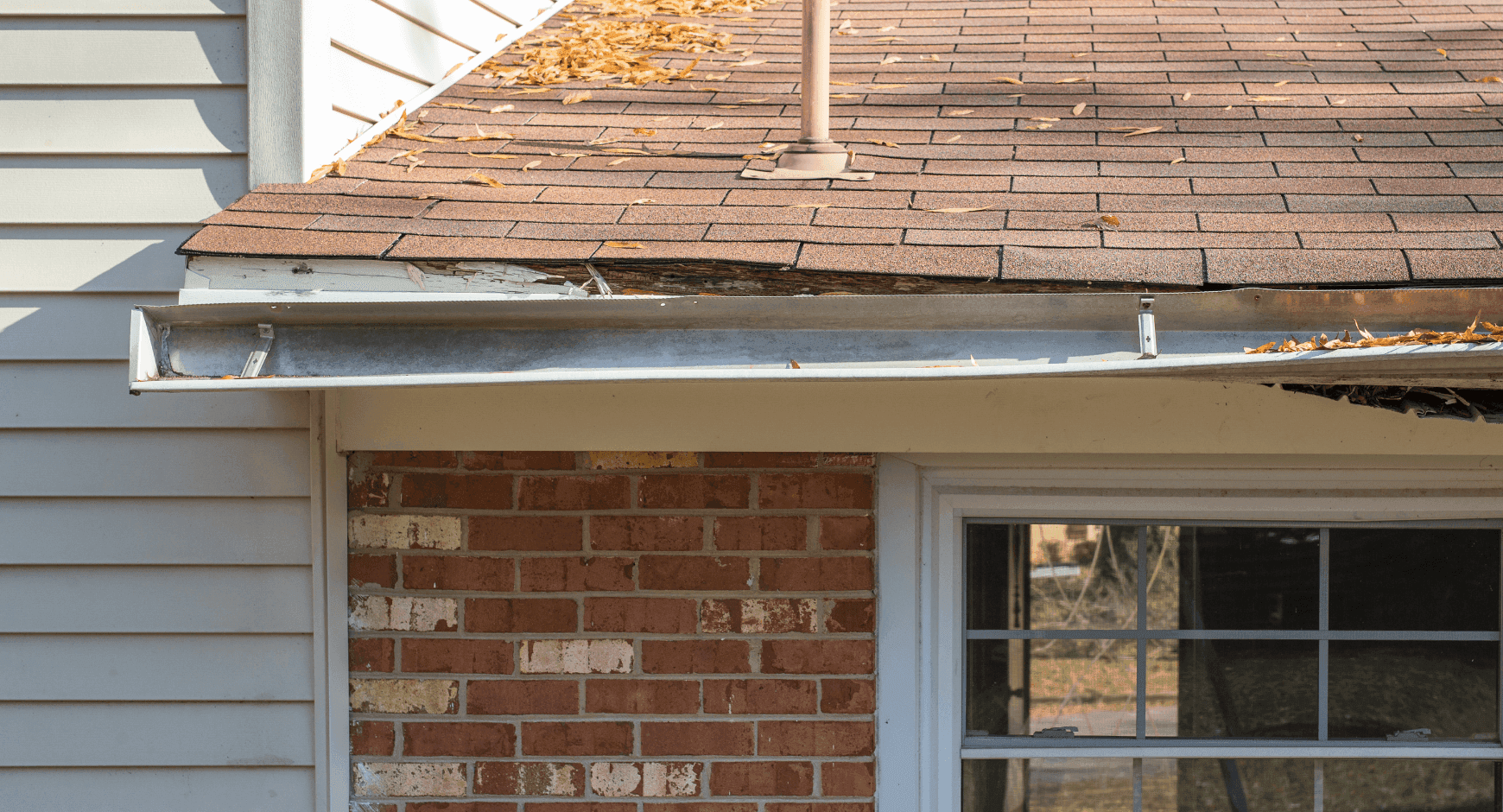
Standing water in a clogged gutter sits against the fascia board for hours. Over repeated storms, that moisture works its way behind the board and into the roof deck, which is one of the most common causes of hidden wood rot we find on inspections.
Foundation and Landscape Erosion
Overflowing gutters dump concentrated water right at the foundation line instead of routing it several feet away through the downspout. Over a summer of repeated storms, that's enough to erode mulch beds, undermine walkways, and in some cases contribute to basement moisture issues.
Signs Your Gutters Are Already at Risk
You don't have to wait for a storm to find out if your gutters are ready for one. A few warning signs are usually visible beforehand.
Visible Debris From the Ground
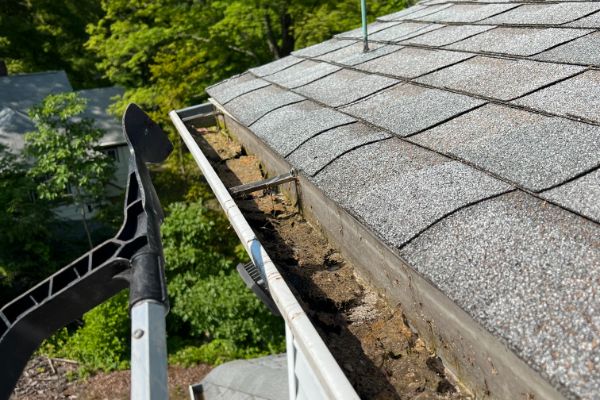
If you can see leaves, seed pods, or buildup sitting above the gutter line from the ground, there's almost certainly more built up below the surface where you can't see it.
Water Marks or Streaking on Siding
Dark streaks running down siding below the gutter line are a strong sign that water overflowed at some point, and it will keep happening at that spot until the clog is addressed.
Sagging or Pulling Sections
Gutters that dip in the middle or pull slightly away from the fascia are carrying more weight than they should. That's almost always standing water and debris, not a structural gutter failure on its own.
What to Do Before the Next Storm Rolls Through
The fix is usually more straightforward than homeowners expect. It's not about replacing the system, it's about restoring the capacity it already has.
Clear Debris Before Storm Season Peaks
A thorough cleaning removes the buildup that's quietly limiting your system's capacity. This matters most heading into peak storm months, when there's no room left for a clog to slow things down.
Check Downspout Flow, Not Just the Gutter Itself
A clean gutter with a blocked downspout will still overflow. Downspouts should be checked separately, since clogs there are less visible but just as disruptive to water flow.
Consider Guards If Debris Is a Recurring Problem
If you're clearing the same buildup every few months, that's usually a sign the system needs a longer-term solution rather than repeated manual cleaning.
When It's Time to Call a Professional
A homeowner can handle light debris removal on a single-story home with the right safety setup. But recurring overflow, sagging sections, or any sign of water behind the fascia is worth a professional look before the next storm, not after the damage shows up.
We inspect the full system, not just the visible debris, so you know whether you're dealing with a simple cleaning or something that needs more attention before storm season peaks.
If your gutters have been overflowing during storms this summer, our gutter cleaning service clears the buildup and checks downspout flow at the same time. And if you're tired of clearing the same debris every season, it may be worth looking into gutter guards as a longer-term fix.
Ready to get ahead of the next storm? Contact us for a free estimate before the next round of Kentucky summer weather rolls in.